

A Call to Remember
For the woman who feels the ancient stirring in her bones. For the seeker who knows there’s medicine in the margins. For anyone ready to remember what was never truly lost.
This article is for you if you’ve ever sensed that the systems we live within are fundamentally at odds with your soul. If you’ve felt the earth herself calling you home to something deeper than productivity culture and patriarchal conditioning. What you’ll discover here is a framework for understanding witchcraft as divine feminine medicine, not as escapism, but as revolutionary remembrance, a path back to the sacred feminine wisdom that colonialism and patriarchy have tried to erase. You’ll explore how this ancient path offers healing for both personal wounds and collective trauma, serving as medicine for the patriarchy that has disconnected us from our sacred nature.
The Rise of Witchcraft as Medicine in a World Out of Balance
We live in a world built on dominance, extraction, and separation, a world deeply shaped by patriarchal power structures that prioritize conquest over connection, productivity over presence, and profit over the sacred pulse of life itself. In this landscape of disconnection, something ancient is stirring. Something that has been buried, burned, and banished is rising again from the ashes of forgotten wisdom.
Witchcraft, mysticism, and the divine feminine aren’t fringe movements or escapist fantasies. They are medicine. They are remembering. They are resistance.
This isn’t about casting spells in pointed hats (though if that speaks to you, beautiful). This is about recognizing that the systems we’ve inherited are fundamentally broken, that witchcraft offers divine feminine medicine, and that the antidote lies not in more of the same linear, extractive thinking that got us here, but in a radical return to the cyclical, the intuitive, the sacred. We’re being called back to ways of being that honor the interconnected web of existence rather than seeking to dominate it.
What follows is an exploration of how patriarchy and colonialism have severed us from the earth, from our souls, and from ourselves, and why reclaiming the path of the witch is an act of profound healing, both personal and planetary.
Patriarchy and Colonialism: A System of Domination and Disconnection
When we speak of patriarchy, we’re not simply talking about men versus women. We’re talking about a hierarchical system that has infected every aspect of our existence: a system that favors domination over collaboration, control over trust, and separation over sacred connection. This system didn’t just emerge in a vacuum, it was actively exported and imposed through colonialism, creating what scholars call “patriarchal colonialism”.
Colonial authorities didn’t just impose new governments, they systematically dismantled Indigenous ways of being that often honored women’s spiritual authority and recognized more fluid, egalitarian relationships between genders. Many Indigenous societies had matrilineal systems, recognized multiple genders, and understood that the earth herself was a living mother deserving reverence rather than exploitation. Colonial regimes imposed their own hierarchical structures onto indigenous communities regardless of how those communities were previously organized, and this re-structuring was instrumental to the continued success of the colonial project.
This wasn’t just cultural change: it was spiritual warfare. For Indigenous peoples, “the Earth is our Mother (and this is not a metaphor: it is real)”. When colonizers severed these sacred relationships between people and land, they weren’t just taking territory, they were attacking the very foundation of spiritual systems that understood the feminine as sacred.
This system has severed our relationship with the earth, treating her not as the living, breathing organism that sustains all life, but as a resource to be extracted from, dominated, and consumed. Ecofeminists have long recognized this parallel: the same mindset that seeks to control and exploit women’s bodies seeks to control and exploit the body of the earth. Both are seen as resources to be managed rather than sacred beings to be honored.
Patriarchal thinking elevates productivity, profit, and linear logic above all else, casting suspicion on anything that can’t be measured, controlled, or commodified. It has no patience for rest, for cycles, for the messy beauty of emotional truth or the wild wisdom of intuition. It demands that we produce rather than be, achieve rather than receive, conquer rather than commune.
Under this system, extractive capitalism becomes not just an economic model but a spiritual philosophy, one that tells us the earth exists for our taking, that our worth is measured by our output, and that the only valid way of knowing is through the rational mind alone. Everything else… the whisper of intuition, the intelligence of the body, the wisdom held in dreams and symbols, is dismissed as primitive, irrational, or irrelevant.
The Loss of the Sacred: How Colonialism Weaponized "Witchcraft"
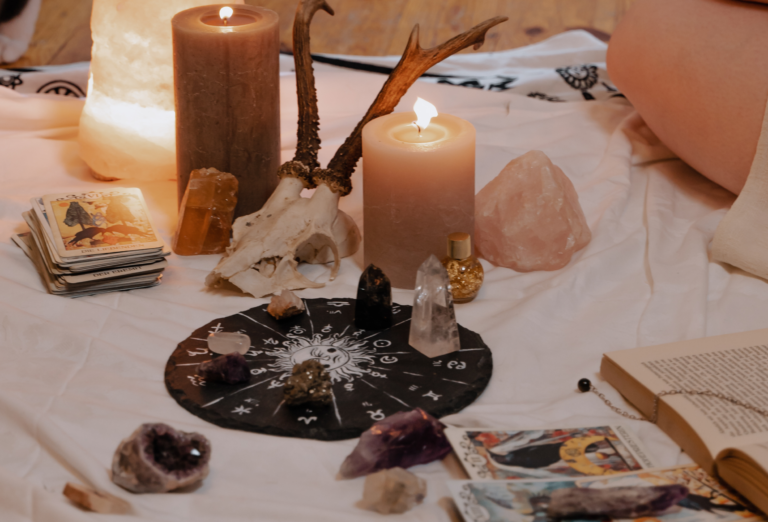
The burning of witches wasn’t just a historical atrocity, it was a deliberate and systematic erasure of feminine power, spiritual authority, and indigenous knowledge. When healers, midwives, herbalists, and wise women were branded as heretics and burned at the stake, it wasn’t just their bodies that went up in flames. It was an entire way of knowing, of being, of relating to the sacred that was systematically destroyed.
But this pattern wasn’t limited to medieval Europe. Colonial regimes around the world weaponized the concept of “witchcraft” to justify suppressing Indigenous knowledge systems. The Spanish conquest of the Americas coincided with European witch hunts, and the latter formed the cultural lens through which the Spanish evaluated native religion and condemned Indigenous healers as witches. In Canada, the Indian Act made practicing Indigenous spirituality forbidden, including traditional medicines and practices. In New Zealand, the Tohunga Suppression Act of 1907 explicitly banned traditional Māori healing practices. As recently as 1931 in British Columbia, Indigenous healers were charged with “practicing witchcraft” for treating patients with traditional methods.
Colonial authorities specifically targeted Indigenous women healers because “as healers and leaders, they embody authority and cultural continuity—and thus, colonial regimes seek to silence them”. The Inquisition’s crackdown on Indigenous healing practices “was a campaign to eliminate indigenous and African spiritual practices from colonial society”. This wasn’t about superstition or primitiveness—it was about destroying systems of knowledge that threatened colonial control.
Patriarchy didn’t just silence these voices—it labeled everything they represented as dangerous, delusional, or regressive. The spiritual, mystical, and intuitive were reframed as threats to order, reason, and progress. The very qualities that had once been revered as divine wisdom were pathologized as madness, hysteria, or primitive superstition.
This erasure paved the way for what we might call the tyranny of scientism—not science itself, which is beautiful and necessary, but the dogmatic belief that scientific materialism is the only valid way of understanding reality. Under this worldview, anything that can’t be measured in a laboratory is dismissed as fantasy. The human soul’s deep need for myth, connection, ritual, and wonder is seen as evolutionary baggage to be discarded in favor of pure rationality.
But here’s what this reductive worldview misses: even modern psychology acknowledges that humans are fundamentally symbolic beings. We need archetype and metaphor, ritual and story, to make meaning of our existence. Carl Jung spoke of the collective unconscious, recognizing that there are depths to human experience that can’t be captured by surface rationality alone. We dream in symbols, we heal through story, we find purpose through connection to something greater than ourselves
Witchcraft Is Not Anti-Reason: Expanding What We Consider Rational
One of patriarchy’s most insidious tricks is creating false binaries, either/or thinking that forces us to choose between reason and intuition, science and spirituality, logic and magic. But this is a trap, and we don’t have to fall into it.
Witchcraft and mystical practices aren’t anti-reason. They’re beyond the narrow confines of what patriarchal culture has defined as reasonable. They engage different ways of knowing, embodied knowledge, intuitive wisdom, symbolic thinking, that complement rather than compete with rational analysis.
Let’s address the elephant in the room: the placebo argument. Skeptics often dismiss magical practices by saying they “only work” through the placebo effect, as if this somehow negates their value. But think about what this actually means. The placebo effect demonstrates that belief literally changes biology. Our thoughts, intentions, and expectations have measurable, documented effects on our physical reality. That doesn’t make placebo “fake” …it makes it incredibly powerful.
If lighting a candle and setting an intention helps you clarify your goals and take aligned action, it works. If performing a ritual helps you process grief, connect with your ancestors, or feel held by something larger than yourself, it works. If working with lunar cycles helps you honor your own rhythms and live with greater awareness, it works. The mechanism might be psychological rather than supernatural, but the transformation is real.
Moreover, magic is a language, a way of engaging with the symbolic dimensions of existence that pure rationality can’t touch. When we work with tarot cards, we’re not necessarily believing that pieces of cardboard predict the future. We’re using archetypal imagery to access deeper patterns, to ask better questions, to see our situations from new angles. When we cast spells, we’re not necessarily invoking literal supernatural forces. We’re clarifying our intentions, aligning our energy, and taking symbolic actions that help us embody the changes we want to see.
This is sophisticated work that demonstrates how witchcraft functions as divine feminine medicine. It requires emotional intelligence, symbolic literacy, and the ability to work with multiple levels of meaning simultaneously. It’s not the opposite of reason, it’s an expansion of what we consider reasonable.
Witchcraft as Divine Feminine Medicine: Healing What Patriarchy Severed
So what exactly is this medicine we’re talking about? What does it mean to walk the path of the witch in a world desperate for healing?
At its core, witchcraft is a spiritual path that returns us to what patriarchy and colonialism have severed: the cycles of nature, the rhythms of the body, and the wisdom of the soul. It’s a reclamation of personal sovereignty, not the ego-driven kind that seeks to dominate others, but the quiet, fierce knowing of your own sacred worth and your right to exist as you are.
The divine feminine, as expressed through witchcraft and earth-based spirituality, honors the full spectrum of existence: life and death, light and shadow, creation and destruction. It doesn’t fear the dark, the unknown, or the wild aspects of being human. Instead, it recognizes these as necessary parts of the sacred whole, as sources of power and wisdom rather than things to be suppressed or transcended.
When we embody this path, profound shifts occur. We move from extraction to reciprocity, taking only what we need and giving back to the web of life that sustains us. We shift from self-abandonment to self-honoring, learning to listen to our bodies, trust our intuition, and respect our own cycles of expansion and contraction. We move from domination to connection, seeking to collaborate with the forces of life rather than control them.
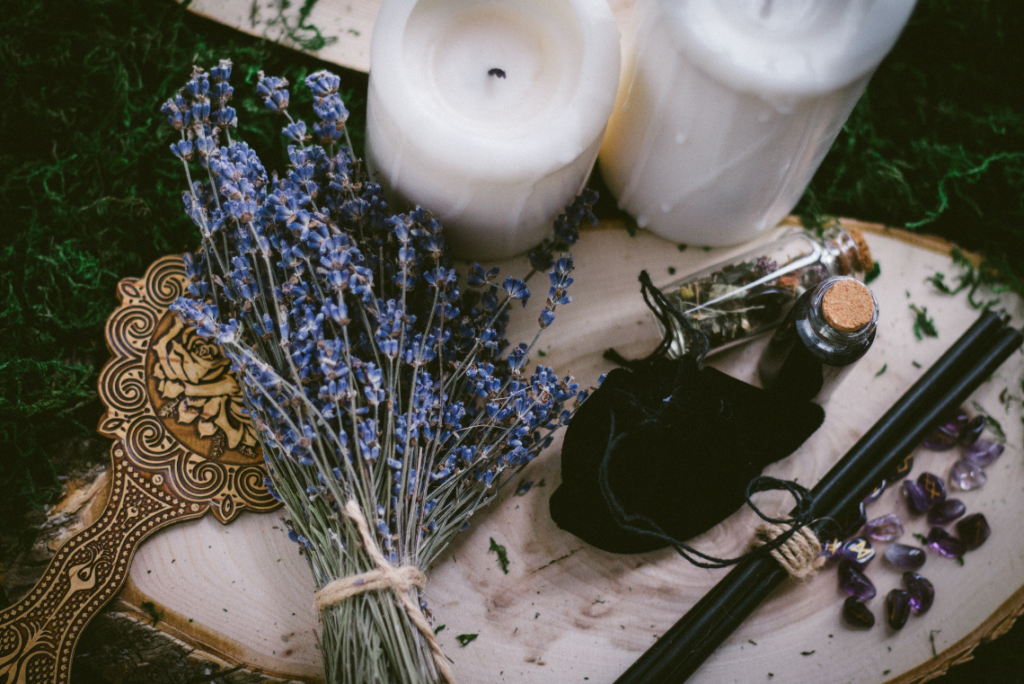
This return to cyclical living is inherently healing. Instead of pushing ourselves to produce constantly, we learn to honor seasons of rest and renewal. Instead of denying our emotions or spiritual needs, we create space for the full range of human experience. Instead of seeing ourselves as separate from nature, we remember that we are nature… walking, breathing, dreaming expressions of the same creative force that moves the stars and grows the tree
“The witch is simply the part of you that remembers: you are sacred, you are connected, you are powerful, and you belong to the web of life that is always conspiring for your healing and wholeness.”
The practice of witchcraft as divine feminine medicine might look like creating morning rituals that connect you to intention before the day’s demands, following lunar cycles to align your energy with natural rhythms, building altars as sacred space for reflection and prayer, working with plant allies through teas or simply time in nature, honoring your ancestors through photos and storytelling, saying no to overcommitment as a sacred boundary practice, celebrating seasonal transitions as opportunities for personal renewal, or using divination as a tool for self-reflection and decision-making. The specific forms matter less than the underlying shift in consciousness: from mechanistic to organic, from exploitative to reciprocal, from disconnected to intimately interwoven with the web of existence.
Honoring the Lineages: Reclamation, Not Appropriation
As we reclaim these paths, we must acknowledge a crucial truth: many of the practices being “rediscovered” by modern practitioners were never actually lost. They were violently suppressed in Indigenous communities that are still fighting for their survival today. The rise of contemporary witchcraft and earth-based spirituality among non-Indigenous people must be grounded in respect for the living traditions that have maintained these connections despite centuries of persecution.
True reclamation of the divine feminine must include solidarity with Indigenous peoples who continue to face the ongoing impacts of colonialism—from Missing and Murdered Indigenous Women to land defenders being imprisoned for protecting sacred sites. When we speak of healing the split between human and nature, we cannot ignore that Indigenous peoples are still being forcibly removed from their ancestral lands so that corporations can extract resources from what colonizers see as “empty” wilderness but Indigenous peoples know as their mother.
Witchcraft serves as divine medicine because the witch in us calls for more than personal healing—she calls for collective liberation that addresses the roots of oppression, not just its symptoms. Our practice becomes medicine for the world when it includes dismantling the systems that continue to marginalize those who have maintained earth-based wisdom despite centuries of attempted genocide.
A Practice for Remembering
How Divine Feminine Medicine Transforms Daily Life
This divine feminine medicine teaches us to embody these teachings through practice. This ritual honors both your personal reclamation and the larger web of healing we’re all part of.
Create a simple altar with a candle, a small bowl of water, and something from nature, a stone, shell, or flower that speaks to you. Light your candle and take three deep breaths, feeling yourself connecting to the earth beneath you and the sky above you. You are held in this web of life.
Honor the lineages by speaking aloud: “I honor the wisdom keepers who came before me. I honor those who maintained these connections despite persecution. I honor the earth who teaches me through every season.” Hold your natural object as you speak, feeling the living energy within it.
Release what no longer serves by writing on a piece of paper one belief or pattern you’re ready to release, something that keeps you disconnected from your power. Burn this paper safely in your candle flame, watching the old story transform into smoke and light.
Call in your medicine with your hands on your heart: “I remember my connection to the earth, to my ancestors, to my own sacred knowing. I reclaim my right to trust my intuition, honor my cycles, and live in service to life itself.”
Seal your intention by dipping your finger in the water and anointing your forehead, heart, and palms. This seals your commitment to embodying your medicine in the world. Close by thanking the directions, your ancestors, and your own brave heart for showing up to this work.
Carry this medicine with you as you move through your days, asking yourself:
- Where am I being called to trust my intuition more deeply?
- How can I honor natural cycles in my daily routine?
- What would change if I truly believed I am sacred?
Witchcraft Is a Return to Self, and the Self Is Sacred
Here’s the beautiful truth at the heart of this path: whether or not you believe in gods, goddesses, spirits, or literal spells, the practice of witchcraft invites you to slow down, listen inward, reconnect to the earth, and live in alignment with something greater than your small, separate self.
The real power isn’t in whether magic “works” in a scientifically measurable sense. The power is that it brings you home… home to your own intuitive wisdom, home to your place in the natural world, home to the recognition that you are not a machine to be optimized but a sacred being deserving of reverence and care.
This homecoming is the essence of witchcraft as medicine for patriarchal conditioning, it’s what heals. When you remember that your body is a temple, you treat it with respect. When you remember that your emotions are sacred messengers, you learn to listen to their wisdom. When you remember that you are part of the web of life, you naturally want to contribute to its flourishing rather than its destruction.
In a world that profits from our disconnection: from ourselves, from each other, from the earth, this remembering is radical. It’s revolutionary. It’s exactly what patriarchal systems fear most: people who know their own worth, trust their own wisdom, and refuse to be separated from their source of power.
The rise of the witch is not about escaping reality, it’s about engaging with reality at a deeper level. It’s about recognizing that the sacred isn’t something outside of us to be worshipped, but something within us to be embodied. It’s about understanding that healing the world begins with healing the split within ourselves: the split between mind and body, reason and intuition, human and nature, sacred and mundane, while also working to heal the splits imposed by systems of domination that continue to separate peoples from their lands, traditions, and each other.
When we close these splits, when we return to wholeness, we become medicine for a world that has forgotten what wholeness looks like. We become living examples of another way of being, one that honors cycles over straight lines, connection over domination, being over doing, and the sacred feminine wisdom that the world desperately needs to remember. But this medicine is most potent when it serves not just our personal awakening but the collective liberation of all beings who have been marginalized by patriarchal, colonial systems.
The witch in you is not separate from the activist in you, the mother in you, the professional in you, or any other aspect of who you are. The witch is simply the part of you that remembers: you are sacred, you are connected, you are powerful, and you belong to the web of life that is always conspiring for your healing and wholeness.
That remembering is the medicine. That remembering is the revolution. That remembering is exactly what the world needs now.
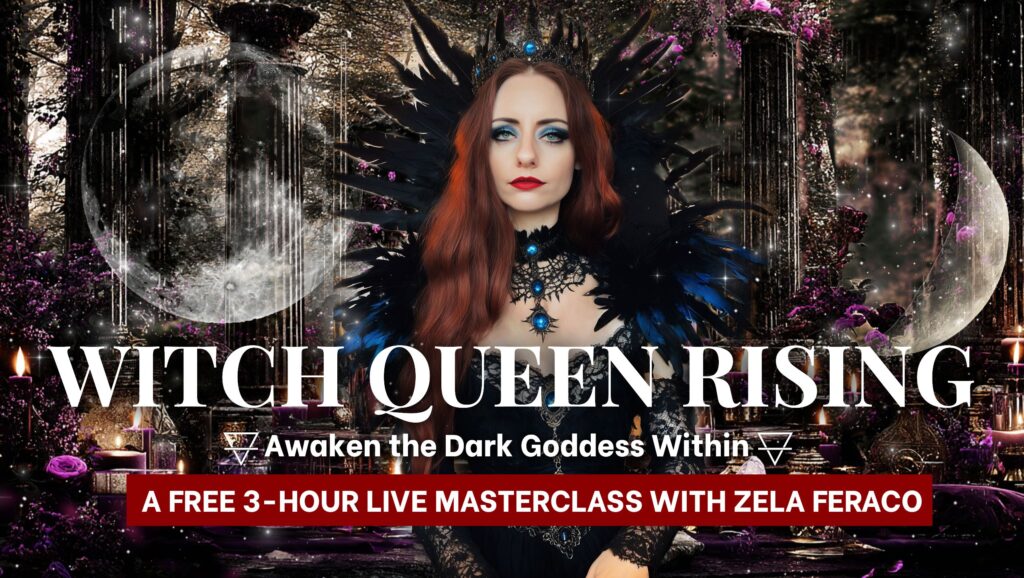
Your Witch Queen Is Rising – Will You Answer Her Call?
If these words have stirred something ancient in your blood, if you feel the pull toward your own sovereign power but don’t know how to trust it in a world built on patriarchal conditioning, your witch queen is calling.
Join me for the free “Witch Queen Rising” masterclass where we’ll go beyond theory into embodied practice. You’ll discover:
✨ How to distinguish between intuitive wisdom and fear-based thoughts (so you can trust your inner knowing with confidence)
✨ The 3 sacred boundaries that protect your energy without creating walls around your heart
✨ Ancient practices for modern witches that help you reclaim your power in boardrooms, relationships, and daily life
✨ Why your sensitivity is actually your superpower (and how to wield it wisely)
This free training is for the woman who’s done with shrinking, done with apologizing for her magic, and ready to embody the fierce, loving authority her soul came here to express.
The patriarchy has had its time. Your witch queen is rising.
Claim your free seat and step into the sovereignty that’s been waiting for you all along.
Bibliography
Academic Sources
Guerrero, M. A. J. (2003). “Patriarchal Colonialism” and Indigenism: Implications for Native Feminist Spirituality and Native Womanism. Hypatia, 18(2), 58-69. https://doi.org/10.1111/j.1527-2001.2003.tb00801.x
Borrows, J., & Morales, S. (2019). “The Earth is Our Mother”: Freedom of Religion and the Preservation of Indigenous Sacred Sites in Canada. McGill Law Journal, 64(4), 777-812. https://lawjournal.mcgill.ca/article/the-earth-is-our-mother-freedom-of-religion-and-the-preservation-of-indigenous-sacred-sites-in-canada/
Griffiths, N. (1987). The evolution of witchcraft and the meaning of healing in colonial Andean society. Social Science & Medicine, 25(4), 383-389. https://pubmed.ncbi.nlm.nih.gov/6362989/
Jung, C. G. (1970). The Archetypes and the Collective Unconscious. Princeton University Press.
Mathur, A., et al. (2022). Canada’s Colonial Genocide of Indigenous Peoples: A Review of the Psychosocial and Neurobiological Processes Linking Trauma and Intergenerational Outcomes. Frontiers in Psychiatry, 13, 820295. https://pmc.ncbi.nlm.nih.gov/articles/PMC9179992/
The Healer, the Witch, and the Law: The Settler Magic That Criminalized Indigenous Medicine Men as Frauds and Normalized Colonial Violence as Care. (2023). Annals of the American Association of Geographers, 114(2), 482-501. https://www.tandfonline.com/doi/abs/10.1080/24694452.2023.2267152
Indigenous Rights & Contemporary Issues
Amnesty International. (2004). Stolen Sisters: A Human Rights Response to Discrimination and Violence against Indigenous Women in Canada. https://www.amnesty.org/en/documents/amr20/018/2004/en/
Center for World Indigenous Studies. (2025). Indigenous Women, Healing, and the Violence of Colonialism. https://cwis.org/2025/04/indigenous-women-traditional-medicine-and-resistance/
Post-Secondary Peer Support Training Curriculum. (2022). Impact of Colonization on Indigenous Peoples’ Culture. https://opentextbc.ca/peersupport/chapter/impact-of-colonization-on-indigenous-peoples-culture/
Historical & Cultural Studies
Few, M. (2020). The Chocolate-Brewing Witches of Colonial Latin America. Gastro Obscura. https://www.atlasobscura.com/articles/were-there-witchhunts-in-south-america
Sharma, N., & Tripathi, P. (2023). Colonial civilizing mission, Indigenous resistance, and witch-hunting in Anvita Dutt’s Bulbbul (2020). AlterNative: An International Journal of Indigenous Peoples. https://journals.sagepub.com/doi/abs/10.1177/11771801231170270
Additional Reading
Ecofeminism & Earth-Based Spirituality
- Merchant, C. (1980). The Death of Nature: Women, Ecology, and the Scientific Revolution. Harper & Row.
- Starhawk. (1979). The Spiral Dance: A Rebirth of the Ancient Religion of the Great Goddess. Harper & Row.
- Gaard, G. (1993). Living Interconnections with Animals and Nature. Temple University Press.
Indigenous Wisdom & Decolonial Theory
- Kimmerer, R. W. (2013). Braiding Sweetgrass: Indigenous Wisdom, Scientific Knowledge and the Teachings of Plants. Milkweed Editions.
- LaDuke, W. (1999). All Our Relations: Native Struggles for Land and Life. South End Press.
- Smith, L. T. (2012). Decolonizing Methodologies: Research and Indigenous Peoples. Zed Books.
Feminist Spirituality & Psychology
- Eisler, R. (1987). The Chalice and the Blade: Our History, Our Future. Harper & Row.
- Woodman, M. (1982). Addiction to Perfection: The Still Unravished Bride. Inner City Books.
- Estes, C. P. (1992). Women Who Run With the Wolves: Myths and Stories of the Wild Woman Archetype. Ballantine Books.
Witch Trials & Historical Suppression
- Federici, S. (2004). Caliban and the Witch: Women, the Body and Primitive Accumulation. Autonomedia.
- Ehrenreich, B., & English, D. (1973). Witches, Midwives, and Nurses: A History of Women Healers. The Feminist Press.
- Levack, B. P. (2016). The Witch-Hunt in Early Modern Europe. Routledge.
Continue exploring the Shadow Scrolls Blog...

Jyotish Wisdom: The June 25, 2025 New Moon in Ardra Nakshatra
How to Be a Confident Witch in a World That Still Fears Us
Dark Divine Feminine: Ancient Wisdom for Modern Mystics
The Goddess Path: Reclaiming Divine Feminine Power